How Crypto Lending Works
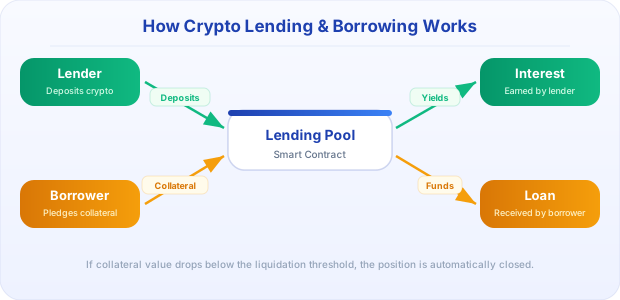
When you lend crypto, you deposit assets into a platform that pools them and makes them available to borrowers. You earn interest, typically paid in the same cryptocurrency. Rates fluctuate based on supply and demand.
How Crypto Borrowing Works
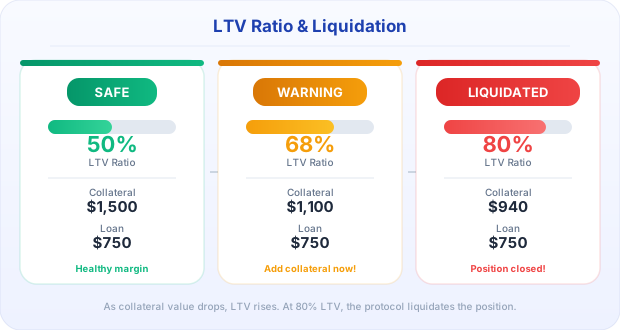
Borrowing is almost always overcollateralized. To borrow $1,000 USDC, you might deposit $1,500 in ETH. The Loan-to-Value (LTV) ratio measures your loan relative to collateral. If your collateral drops and LTV exceeds the liquidation threshold, your collateral is automatically sold.
CeFi vs. DeFi Lending
CeFi (Exchange-Based)
Binance, Bybit Global, and Crypto.comoffer "Earn" products. Simple interface, no gas fees. Risk: counterparty risk — if the exchange becomes insolvent, deposits are at risk.
DeFi (Protocol-Based)
Aave, Compound, and Morpho operate as smart contracts. Transparent and self-custodial — funds controlled by code, not a company. Risk: smart contract bugs. See our DeFi guide for more.
Current Yields in 2026
Stablecoins: 3–7% APY. ETH: 1–4% APY (competes with staking — see our staking guide). BTC: 0.5–3% APY. If yields are significantly above these ranges with no clear explanation, treat it as a red flag.
Risks
Counterparty risk (CeFi): Exchange insolvency. Smart contract risk (DeFi): Code bugs draining pools. Liquidation risk: Sharp drops can liquidate borrowers before they react. Interest rate risk: Variable rates can change rapidly.
Lessons from Past Failures
Celsius: 17–18% yields funded by risky investments. Filed bankruptcy — users lost $4.7B. BlockFi: Exposed to FTX/Alameda collapse. Voyager: Massive unsecured loan to Three Arrows Capital. Common thread: opaque operations, poor risk management, commingled funds.
Best Platforms in 2026
CeFi: Binance Earn, Kraken staking/earn, Crypto.com tiered earn, Bybit Global earn products. DeFi: Aave V3 (gold standard), Compound V3. Start small and diversify across platforms.
Getting Started Tips
Start small. Understand where yield comes from. Diversify across platforms. Monitor LTV ratios if borrowing. Keep tax implications in mind — lending interest is taxable income in most jurisdictions.