What Is a Grid Bot?
A grid bot is an automated trading tool that places a series of buy and sell orders at predefined price intervals within a set range. Imagine laying a grid of horizontal lines across a price chart. Every time the price drops to a grid line, the bot buys. Every time it rises to the next line, the bot sells. This captures small profits from natural price oscillations without requiring you to watch charts 24/7.
Grid bots thrive in sideways and mildly volatile markets where prices bounce between support and resistance. They are one of the most popular forms of automated trading in crypto because the market is open 24 hours a day, seven days a week, and price fluctuations are constant. Several exchanges now offer built-in grid bots with no coding required.

Spot Grid Bot
The spot grid bot is the most common and beginner-friendly type. It trades on the spot market, meaning you are buying and selling actual crypto assets — no leverage, no margin, no liquidation risk. You define an upper price, a lower price, and the number of grid lines between them. The bot then distributes buy and sell orders evenly across that range.
Spot grid bots work best for coins that trade within a predictable range. For example, if Bitcoin has been oscillating between $58,000 and $65,000 for several weeks, a spot grid bot in that range will profit from every bounce. The downside: if the price breaks above your upper limit, the bot sells all holdings and stops earning. If it crashes below your lower limit, you are holding assets at a loss.
Futures Grid Bot
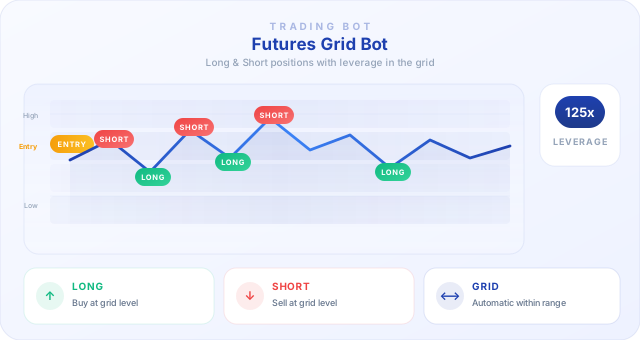
The futures grid bot applies the same grid logic but on perpetual futures contracts instead of spot. This introduces leverage, which amplifies both profits and losses. You can run futures grid bots in long-only mode (profiting from upward oscillations), short-only mode (profiting from downward oscillations), or neutral mode (profiting from movement in either direction).
Futures grid bots are suited for experienced traders who understand margin, funding rates, and liquidation mechanics. The profit potential is higher than spot grids, but so is the risk. A sudden move beyond your grid range while using leverage can lead to significant losses or even liquidation of your position.
Infinity Grid Bot
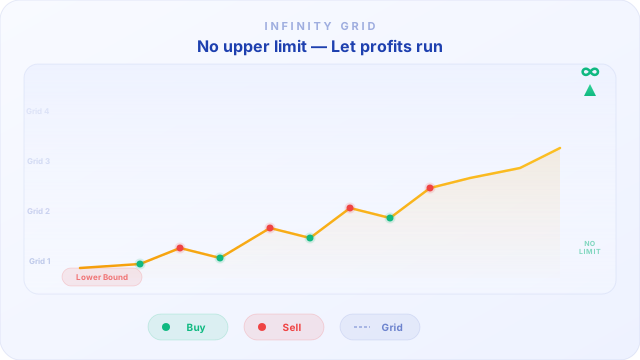
The infinity grid bot is a variation that removes the upper price boundary. While a standard grid bot stops selling once the price exceeds your top grid line, the infinity grid keeps creating new sell orders as the price rises. This means you never fully miss a rally — the bot continues capturing profits at progressively higher levels.
The trade-off is that each sell order represents a smaller percentage of your portfolio as the price climbs. Infinity grids are ideal for long-term bullish positions where you want to accumulate profits along the way without capping your upside. They are particularly popular during sustained uptrends where a standard grid would stop working once the price breaks out.
DCA Bot (Dollar Cost Averaging Bot)
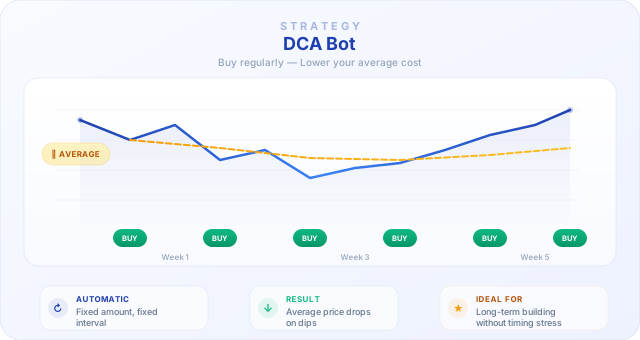
A DCA bot automatically buys a fixed amount of crypto at regular intervals — daily, weekly, or monthly. Unlike grid bots, it does not try to time the market or profit from oscillations. It simply accumulates over time, averaging your entry price across market highs and lows.
DCA bots are perfect for long-term investors who believe in a coin but do not want to stress about entry timing. Historically, dollar cost averaging into Bitcoin over any four-year period has been profitable. Many exchanges integrate DCA into their auto-invest or savings features, making it extremely easy to set up.
Reverse Grid Bot
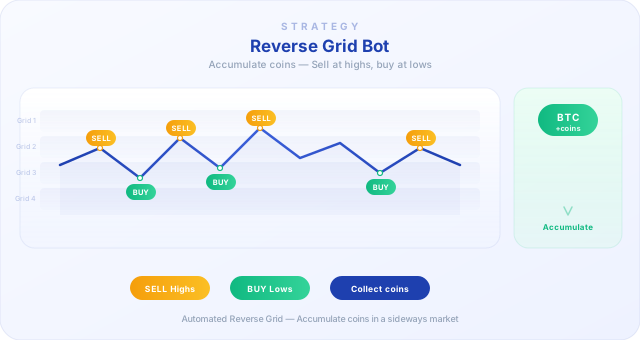
The reverse grid bot does the opposite of a standard spot grid: it starts by selling your existing holdings and buys them back at lower prices. This is useful when you hold a large position in a coin and expect the price to decline or trade sideways. The bot gradually takes profit on the way down and re-accumulates if the price recovers.
Reverse grids are a defensive strategy. They help you lock in gains during uncertain markets without fully exiting your position. If the price drops significantly, you end up buying back more coins than you started with. If it rallies instead, the bot sells your holdings, which means potential opportunity cost.
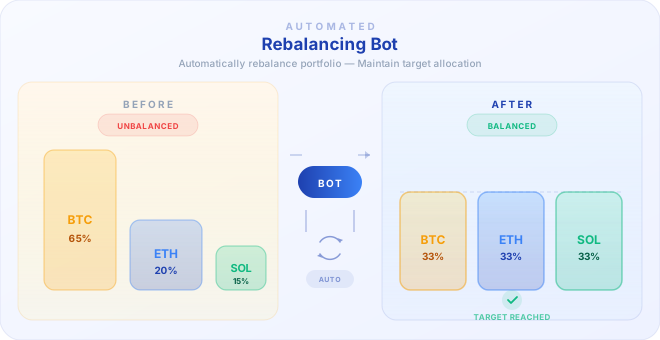
Rebalancing Bot
A rebalancing bot maintains a fixed portfolio allocation across multiple assets. For example, you might set a target of 50% Bitcoin, 30% Ethereum, and 20% Solana. As prices move and shift these ratios, the bot automatically sells overperforming assets and buys underperforming ones to restore the original balance.
This strategy is rooted in traditional portfolio theory and works well for investors who want diversified exposure without manual intervention. It systematically "buys low and sells high" at the portfolio level. Rebalancing bots are particularly effective during altcoin seasons when different tokens rotate in and out of momentum.
Which Exchanges Offer Grid Bots?
Pionex stands out with 16 free built-in trading bots, including spot grid, futures grid, infinity grid, DCA, reverse grid, rebalancing, and more. It is the go-to platform for bot-focused traders with zero extra fees for bot usage. Bitget offers spot and futures grid bots with an intuitive setup wizard and AI-assisted parameter suggestions that analyze recent price history.
KuCoin Global provides spot grid, futures grid, DCA, and infinity grid bots with detailed backtesting data so you can evaluate strategies before deploying capital. BingX features grid bots alongside its popular copy trading system, allowing you to both automate strategies and follow experienced traders. Bybit Global also offers grid bots with competitive fees and a clean interface.
When to Use Each Bot Type
Use a spot grid bot in ranging markets when you expect a coin to trade sideways. Use a futures grid bot when you have a directional conviction and want amplified returns. Choose an infinity grid for coins in a confirmed uptrend where you do not want to cap your gains. Run a DCA bot when you want hands-off accumulation of blue-chip assets over months or years.
Deploy a reverse grid when you are sitting on profits and want to systematically take them during a cooldown. Use a rebalancing bot when you hold a diversified portfolio and want automatic allocation management. Many experienced traders run multiple bot types simultaneously across different market conditions and coin pairs. For detailed setup instructions and strategies, see our grid bot strategy guide.